
Field-tested on live public waters under state approval, from toxic algae to invasive species.
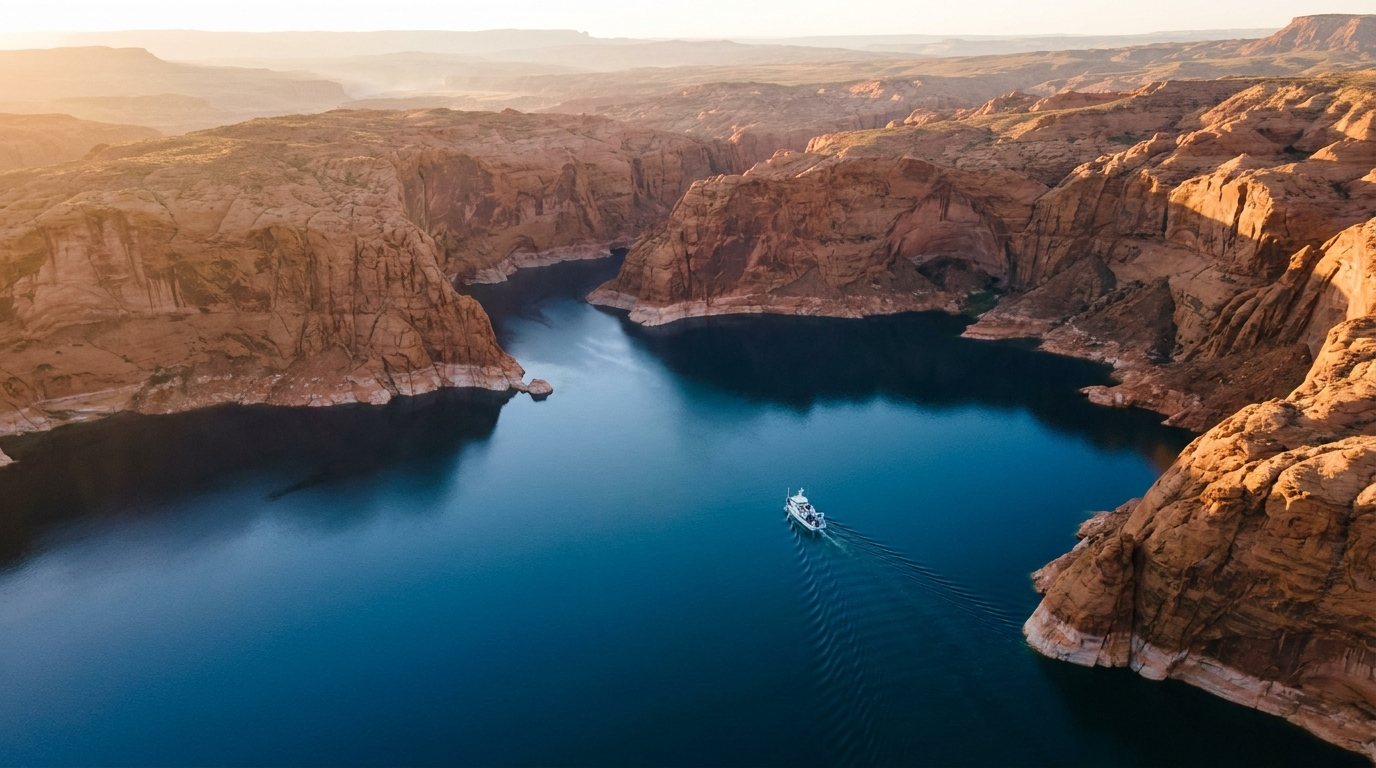
Very few research programs are ever cleared to treat live public waters. Ours was. Through a rare state exemption granted by the Arizona Department of Environmental Quality, PHP37 research was applied to a toxic algae bloom at Lake Havasu, considered a first-in-state use of a novel application supported by scientific research results.
At Lake Pleasant, eradication research on quagga mussels, among the most destructive invasive species in the American Southwest, was conducted with the Arizona Department of Fish & Game. Related work extends to boat hulls, marine engines, and the water infrastructure these species colonize.
These are not marketing numbers. They are laboratory results from our joint research with Arizona State University's Environmental Microbiology Laboratory, presented publicly through the NSF Water and Environmental Technology Center program.
The biocidal effect appears at concentrations as low as 0.002% in water with sufficient contact time. That is performance delivered at doses measured in thousandths of a percent, mild on facilities, equipment, and submerged surfaces.
The platform's flocculant properties allow easy removal of particulates in water, a capability with direct application to municipal treatment, industrial ponds, pools, fountains, and small lakes. With U.S. water and wastewater treatment facing decades of modernization, wastewater treatment represents one of the largest opportunities in front of the platform in North America and worldwide.